In this digitally driven world, mobile applications have become a necessity of modern life. From banking apps to e-commerce, fitness checks, and communication tools, everything is done through a mobile app. With increasing reliance on mobile apps, mobile app security is no longer an option. It is the priority.
The global average cost of a data breach, in USD, is a 9% decrease over last year—driven by faster identification and containment. This clearly states that as AI is helping the business world with faster output, it also helps cyber attackers use AI for data breaches.
In this blog, we will discuss the top 10 mobile app security companies to look for in 2026. We have analyzed these names based on compliance standards, innovation, expertise, and real-world performance. But before we dive into the names of companies, let’s read about the key criteria for selecting reliable mobile app security companies.
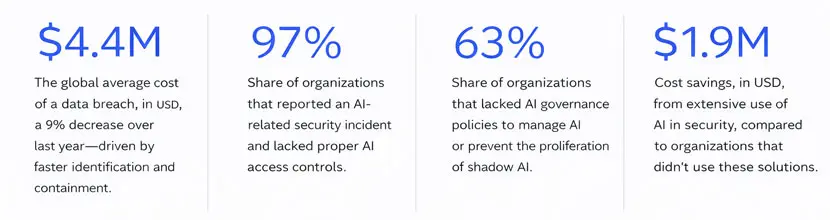 Source: https://www.ibm.com/
1. Beyond Key
Beyond Key is a leading mobile app security service provider with SOC 2 Type II compliance and ISO certification to ensure a fully secure data ecosystem. With a team of certified ethical hackers and Microsoft security professionals, they provide comprehensive services:
Best for: Organizations looking for a mobile app security company that goes beyond checkbox compliance.
2. Techcronus Business Solutions
Techcronus Business Solutions is a trusted mobile app development and security company that helps startups, SMEs, and enterprises build secure, scalable, and high-performance mobile applications. By following secure development practices and integrating security throughout the software development lifecycle (SDLC), Techcronus ensures mobile apps are protected against evolving cyber threats while delivering exceptional user experiences.
Services:
Best for: Businesses looking for a reliable mobile app development and security partner that delivers secure, compliant, and scalable applications with a security-first approach.
3. HCL AppScan
They have a powerful app security testing tool. They ensure vulnerability detection throughout the app cycle and provide actionable insights. They prefer only automated testing methods, AI-powered threat detection, and work on these compliance methods: GDPR, PCI-DSS.
Best for: Businesses focused on automation and compliance
4. Checkmarx
Checkmarx is designed to provide security for your information. It saves time and keeps apps secure to deliver unparalleled mobile experiences that are highly secured. It features SAST and API security testing and is known for developer-first security approach.
Best for: DevSecOps pipelines and agile development teams
5. NowSecure
They specialize in DevSecOps automation and mobile app security testing. NowSecure offers real-device testing environment, advanced risk scoring, and continuous monitoring services while finding both known and unknown vulnerabilities. Compliance they adhere to: GDPR, NIST, FISMA and NIAP.
Best for: Enterprise seeking mobile threat intelligence in real-time
6. Appknox
It is a renowned application security platform for iOS and android apps. They focus on cloud-based testing platform and provide enterprise-grade reporting and vulnerability testing.
Best for: Organizations seeking scalable and quick solutions
7. Cobalt
Known as the pioneer of PTaaS model, Penetration Testing as a Service (PTaaS), Cobalt connects organization to the vetted, skilled cybersecurity experts. From scoping to scheduling, reporting to remediation, they align nicely with the modern development workflows.
Best for: Organizations needing on-demand penetration testing support
8. Synack
Synack is a leading service provider that focuses on automated capabilities to identify data threats. They offer robust defense mechanisms against cyber-threats. Synack is recognized by top analysts.
Best for: Organizations prioritizing an agile and scalable approach to mobile security
9. NetSPI
NetSPI is a renowned mobile app security service provider, offering PTaaS (Penetration Testing as a Service) as one of its key offerings. With a team of cybersecurity professionals, they offer quick, reliable and scalable ways to find misconfigurations for enhanced data security.
Best for: Companies that want speedy and reliable penetration security services
10. VeraCode
VeraCode offers a PTaaS for mobile applications. They are known for offering automated static and dynamic analysis with expert-led testing services to uncover business logic flaws and other vulnerabilities.
Best for: Organizations seeking one-stop-shop application testing services, from automated to human-led approach
| Company | Overview | Key Features | Compliance & Standards | Best For |
| Beyond Key | A mobile app security service provider offering testing and secure development support for modern applications. | Security testing, DevSecOps support, enterprise application expertise | SOC 2 Type II compliance, ISO certification, GDPR-focused secure development practices | Mid-size to enterprise organizations looking for end-to-end security services |
| Techcronus Business Solutions | Techcronus Business Solutions is a trusted mobile app development company specializing in secure, scalable, and enterprise-grade mobile applications | DevSecOps Integration, Security Testing Support, AI-Powered Mobile Solutions | OWASP Mobile Top 10, OWASP MASVS, GDPR,HIPPA, PCI DSS | Businesses looking for secure mobile app development for healthcare, fintech, eCommerce, logistics, and other enterprise applications requiring compliance and strong security. |
| HCL AppScan | A powerful application security testing platform that helps detect vulnerabilities throughout the development lifecycle. | Automated testing, AI-powered threat detection, continuous vulnerability scanning | GDPR, PCI-DSS | Businesses focused on automation and compliance |
| Checkmarx | A developer-focused application security platform known for secure coding and mobile app protection. | SAST, API security testing, developer-first security approach | OWASP-based security practices | DevSecOps pipelines and agile development teams |
| NowSecure | A mobile-first security platform specializing in real-device testing and advanced vulnerability detection. | Real-device testing, continuous monitoring, risk scoring | GDPR, NIST, FISMA, NIAP | Enterprises seeking real-time mobile threat intelligence |
| Appknox | A cloud-based mobile application security platform focused on scalable vulnerability testing. | Cloud-based testing, enterprise reporting, iOS & Android security testing | GDPR-aligned security practices | Organizations looking for fast and scalable mobile app testing |
| Cobalt | A well-known PTaaS provider that connects organizations with cybersecurity experts for on-demand testing. | PTaaS model, expert-led penetration testing, flexible security testing workflows | Enterprise-grade penetration testing standards | Organizations needing on-demand penetration testing |
| Synack | A leading security testing provider focused on automated threat detection and advanced cyber defense solutions. | Automated vulnerability detection, advanced cyber-threat defense, analyst-recognized platform | Enterprise-level security standards | Organizations prioritizing an agile and scalable approach to mobile security |
| NetSPI | A security testing company offering fast and scalable mobile app penetration testing services. | PTaaS, vulnerability assessment, expert-led testing | Enterprise-level compliance support | Companies needing quick and reliable penetration testing |
| Veracode | A well-known application security platform that combines automated testing with expert-led security services. | Static + dynamic testing, expert-led security analysis, vulnerability detection | OWASP-aligned security practices | Organizations looking for end-to-end application security testing |
The mobile app security services need AI-powered surveillance and embedded intelligent security features. Let us read in detail:
1. AI-driven defense and attack
AI and machine learning algorithms will analyze a large volume of data and identify anomalous behavior by external users in real time. Organizations can identify fraudulent transactions in real-time.
2. RASP and runtime protection
Runtime Application Self-Protection (RASP): RASP will become a baseline security requirement, embedding security directly within the application to detect tampering, hooking frameworks, or rooted environments at runtime.
3. AI-powered fraud & “cloud phone” attacks
Fraudsters use virtual mobile devices to simulate real users. These mobile devices are reshaping the way attackers attempt digital fraud.
Mobile applications have become a necessity for survival in the digitally driven world. Therefore, safeguarding mobile app data is critical. With the growing prevalence of AI-driven and automated attacks, organizations should invest in leading security services to gain a long-term competitive advantage.
1. What does a mobile app security company do?
A mobile app security company finds out and fixes application vulnerabilities. They perform many processes such as testing, code analysis, and security audits to secure user data and avoid cyberattacks.
2. How do I choose the best mobile app security company?
You should look for these factors while selecting mobile app security company:
3. How much does mobile app security testing cost?
Costs vary based on app complexity, features, and testing depth, typically ranging from a few hundred to several thousand dollars.
4. Why is mobile app security important for businesses?
It protects sensitive user data, prevents financial loss, maintains brand trust, and ensures compliance with data protection regulations.
5. What are the common security risks in mobile apps?
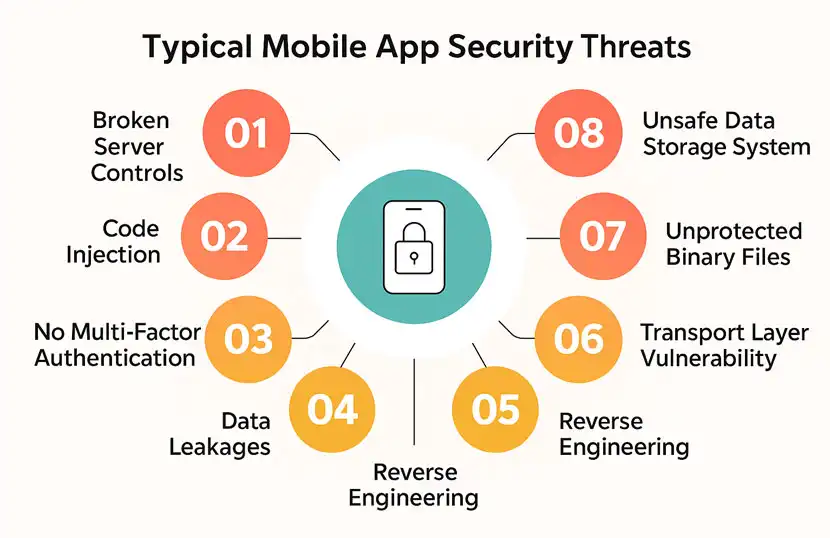
Common risks include insecure data storage, weak authentication, poor encryption, API vulnerabilities, and exposure to malware or reverse engineering.
6. What should I look for in a mobile app security service?
Choose a service that offers comprehensive testing (like penetration testing), real-time threat detection, compliance support, detailed reports, and ongoing security monitoring.