In this tech-driven world, finance professionals are overwhelmed by vast amounts of data and must make swift, smart decisions. Many of them are trapped in managing multiple tools and spreadsheets that don’t sync with each other.
Imagine the finance team is working on platform A, and the sales team operates from a different location and adds data on platform B. On the other hand, the production, purchase, and quality management teams operate on on-premises, local software. How does this situation look?
Disparate tools slow efficiency and leave finance teams reactive rather than proactive. In this blog, we will see how Microsoft Dynamics 365 Finance and Operations helps global businesses manage their finance operations while integrating with front-office departments.
MS Dynamics 365 is built on the foundation of Dynamics Axapta. Microsoft ended support with this leading ERP solution: Dynamics Axapta, encouraging organizations to migrate to cloud solution, MS Dynamics 365.
Microsoft has bifurcated Dynamics 365 Finance and Operations in two parts:
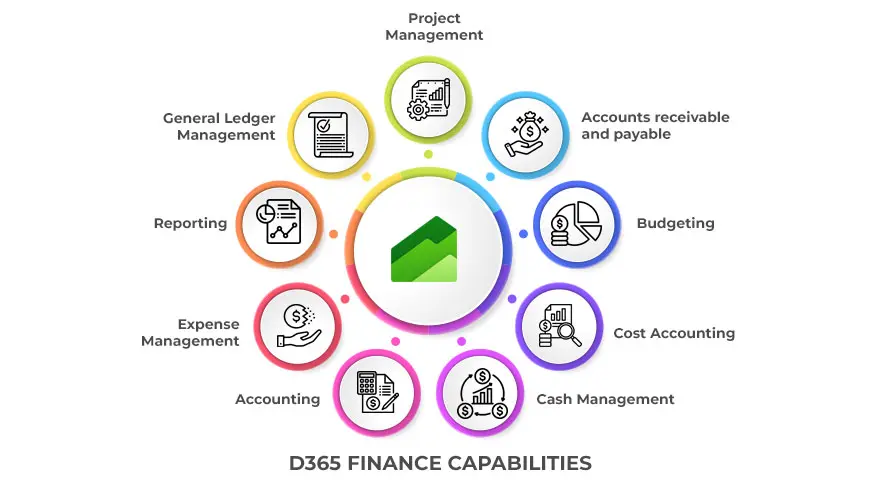
This software manages finance-related operations. It focuses on the general ledger, fixed assets, budgeting, and more. AI-powered capabilities for Dynamics 365 Finance include automating vendor payments, while allowing finance teams to move from traditional operations to strategic decision-making.
From warehousing and inventory to production and other departments, Dynamics 365 Supply Chain Management streamlines overall business performance. AI-powered capabilities for Dynamics 365 include anticipating equipment maintenance needs, forecasting demand, and more.
1. CFO: From Month-End Stress to Strategic Insights
2. Operations Manager: Commanding the Supply Chain in Real Time
3. IT Director: Simplifying Complexity Across Enterprise
 The Cloud Advantage
 Dynamics 365 Finance and Operations, being a cloud-native system, is designed to operate in the cloud. It is suitable for only those organizations that need a cloud-based business management system. Let’s read about cloud-native architecture in detail:
Choosing ERP software for your organization requires evaluating many features. Let us read in detail about how Dynamics 365 stands out from other solutions:
Dynamics 365 offers intuitive user experience, a responsive design, and modern dashboards. With a mobile-friendly interface, users can manage operations on the go on MS Dynamics 365.
Unlike legacy systems known for clunky menus or green-screen interfaces, Microsoft Dynamics 365 offers a modern, intuitive user experience. The interface mirrors familiar Microsoft tools, reducing the learning curve and accelerating adoption. Employees don’t feel like they’re battling the system—they feel enabled by it.
Many ERPs require expensive middleware to connect with collaboration and productivity tools. Dynamics 365 is natively integrated with Microsoft Teams, Microsoft Outlook, and Microsoft Excel. That means finance teams can analyze data in Excel, collaborate in Teams, and manage communications in Outlook—all without disconnected workflows or costly third-party connectors.
Legacy ERP systems require capital expenditure for:
On the other hand, Dynamics 365 operates on a subscription-based model, offering predictable monthly costs. Adopting a cloud-based, subscription model supports scalable growth while preserving cash flow.
Dynamics 365 Finance and Operations can streamline operations for small to large companies and global corporations across multiple industries, including manufacturing, finance, retail and commerce, distribution and logistics, and more. This can be explained with an example:
Microsoft Dynamics 365 Finance and Operations is the perfect solution for disconnected reports, delayed decisions, and scattered data, requiring manual intervention. This platform offers real-time visibility, AI-driven insights, high-level forecasting, and streamlined collaboration across all business departments. Key benefits of MS Dynamics 365 are:
If you’re wondering how to transform your ERP platform into a modern environment, how Dynamics 365 Finance & Operations can help you with this journey. You can learn more about Microsoft Dynamics 365 Finance and Operations by contacting our solution experts. They are ready to help you.
1. What is Dynamics 365 Finance and Operations?
Microsoft Dynamics 365 Finance and Operations is a cloud-based ERP system designed to streamline operations for small to large-scale businesses. It centralizes data from multiple departments such as supply chain, manufacturing, finance, and more. With AI-driven insights and automated workflows, businesses can improve overall business operations.
2. What are the key features of Dynamics 365 Finance and Operations?
The key features of Dynamics 365 Finance and Operations include: intelligent supply chain and inventory, AI-powered automation (Copilot), manufacturing optimization, compliance, scalability, and integration ecosystem.
3. Who should use Dynamics 365 Finance and Operations?
Dynamics 365 F&O is suitable for medium to large –scale organizations, global or multi-location businesses, supply chain heavy industries, retail and distribution process and every business that seek standardized operations and scalable solutions.
4. How does Dynamics 365 Finance improve financial management?
Dynamics 365 Finance helps improve financial management by offering features for advanced budgeting, compliance, and forecasting. It provides businesses with real-time financial insights with modern analytics capabilities and ensures that audit and regulatory requirements are met.
5. Is Dynamics 365 Finance and Operations cloud-based?
Yes, Dynamics 365 Finance and Operations is cloud-based. It primarily runs on the Microsoft Azure cloud.