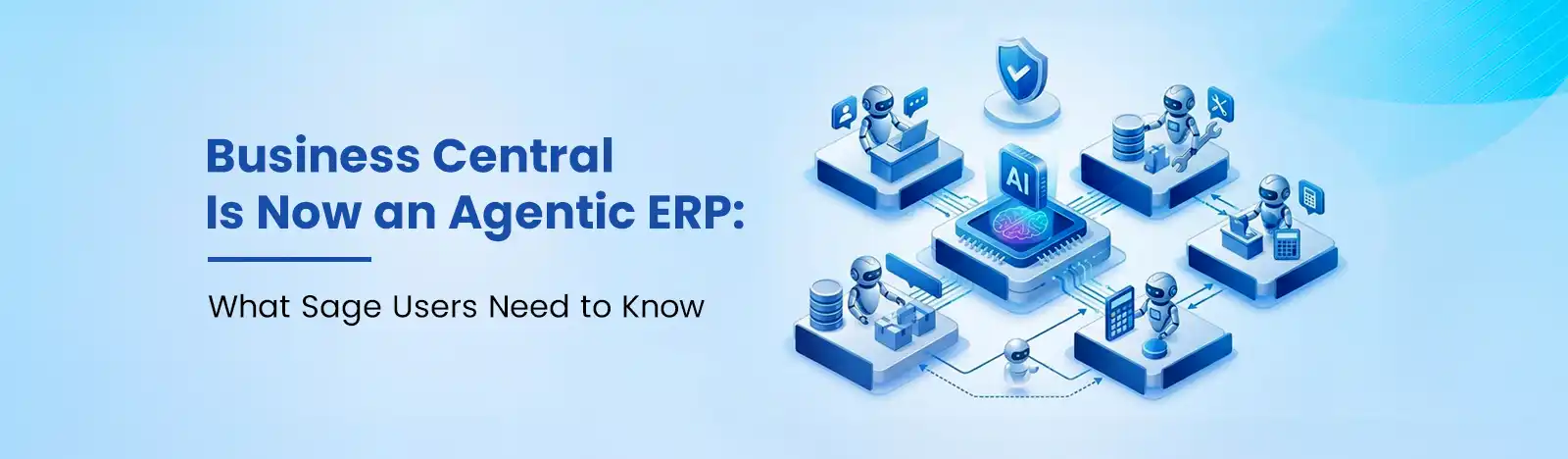
When we supply and install an agentic AI automation system with RPA integration, you get a working stack, not a stack of licenses. That means the infrastructure it runs on, the reasoning layer where the AI agents actually plan and make decisions, the connectors that link them into your line of business systems, and the orchestration that lets those agents trigger your existing RPA bots, keep an eye on them, and step in when something goes wrong.
If you have arrived here from a tender or an RFP line item, that phrase is doing a lot of work. Here is what sits underneath it.
RPA is deterministic. A bot follows a recorded path: log into a portal, copy a value, paste it into an ERP screen, close. Change the screen layout and the bot breaks.
Agentic AI is goal driven. You give an agent an objective such as “reconcile this batch of supplier invoices and flag anything outside tolerance”, and it decides which steps to run, in what order, using which tools. When something unexpected appears, it reasons about it instead of failing.
| Dimension | RPA bots | AI agents |
| Instruction style | Step by step script | Goal and constraints |
| Handles unstructured input | Poorly | Yes, natively |
| Behavior on exceptions | Fails or escalates | Reasons, retries, escalates with context |
| Best used for | High volume, stable, rules-based tasks | Judgement, triage, exception handling, orchestration |
| Cost per transaction | Very low | Higher, so use selectively |
The important conclusion: you do not rip out RPA to adopt agentic AI. You put agents above the bots. Agents become the supervisor. Bots remain the cheap, reliable hands. This is also where Beyond Key’s own delivery history started — our Power Automate–based RPA practice has been running since 2022, which is precisely why the agent layer gets built on top of that estate rather than around it.
A production ready system usually has six layers.
See Microsoft’s Agent Factory design patterns series for the underlying architecture patterns.
Skip layer six and you will pass the pilot and fail the audit.
If you are writing or answering a tender, this is the checklist worth insisting on.
Anything missing from that list becomes a change request later, usually at a worse price.
Most programmes follow five phases. Timelines hinge on the number of processes, the state of your data and the speed of your approvals. Treat any duration as planning guidance, not a commitment.
Phase 1: Discovery and process selection. Score candidate processes on volume, exception rate, business value and data readiness. Pick two or three for the first release. Resist the urge to start with the hardest process in the business.
Phase 2: Environment build. Provision tenants, configure identity, set up landing zones, connect source systems in a sandbox, establish CI/CD for agent and bot artefacts.
Phase 3: Agent build and RPA wiring. Define each agent’s role, tools and guardrails. Wrap existing bots as callable actions. Build the human in the loop approval points. Ground the agents in real documents and records.
Phase 4: Testing and tuning. Run a golden dataset through the system, measure accuracy and escalation behavior, then tune instructions, retrieval and thresholds. Quality is created here.
Phase 5: Go live and support. Deploy to production, then run in shadow mode alongside your existing operations wherever the risk is high and cut over once the results hold up. From there it is daily monitoring and weekly tuning.
Zero-Touch, Agentic AI Accounts Payable Platform: US Manufacturing Enterprise
This is the accounts payable scenario in practice: Beyond Key built an agentic AI automation platform for a US-based manufacturing client to move invoice processing toward zero-touch — agents handling capture, validation, and exception routing across the AP workflow, with the existing automation estate wired in rather than replaced.
Download the case study: Beyond Key case study — Zero-Touch, Agentic AI Accounts Payable Platform.
Three integration patterns cover most real deployments.
Agent calls bot. The agent decides a task is routine and hands it to a bot. Cheapest and most common. Good for data entry, portal downloads and legacy systems with no API.
Bot calls agent. An existing bot hits something unstructured, an email, a scanned PDF, a free text note, and passes it to an agent for interpretation before continuing. The fastest way to add value without redesigning anything.
Agent supervises a bot fleet. The agent monitors queues, diagnoses failures, retries with corrected input and escalates with a written explanation. Operational savings usually show up here, because bot maintenance is a recurring cost.
Ask the following before signing anything.
That last question matters more than most buyers realize.
Over 40% of agentic AI projects will be canceled by the end of 2027, due to escalating costs, unclear business value or inadequate risk controls.
Source: Gartner
There are four things a shortlist should test for. Engineering depth in the stack you have chosen, proven by work that went to production rather than to a demo environment. Integration history with your own ERP, CRM and document systems. A governance model you can look at, not a slide about one. And a support arrangement that is still held in the first quarter after go live, which is when the awkward cases show up.
Modernizing automation does not have to mean starting over.
Beyond Key is a Chicago headquartered Microsoft Solutions Partner covering Azure AI, Power Platform, Dynamics 365, SharePoint and Microsoft 365. Our automation teams build agentic systems around your existing RPA, so you keep the bots that still do their job and add a reasoning layer above them. Related engagements include AI-powered import shipping document automation and an Azure OpenAI–based chatbot for a Chicago pharma company’s data access, both of which share the same agent-plus-connector architecture described above.
Clients we have served across the globe: Szul.com, QSC Audio, Costa Mesa, CA, USA, CGIAR System Organization and many Fortune 500 companies.
Modernizing automation does not have to mean starting over.
If you’re scoping an agentic AI and RPA integration project, Beyond Key’s automation team can walk through your existing bot estate, your source systems, and where a reasoning layer would actually pay for itself.
What is an agentic AI Automation system? It is an automation platform where AI agents receive a goal, plan the steps, call tools and bots to execute them, handle exceptions using reasoning, and escalate to a person when confidence or authority runs out.
Do we need to replace our existing RPA bots? No. In most deployments the bots are kept and wrapped as tools the agents can call. Replacement is usually only worth considering for bots that break constantly because the underlying application changes often.
How long does installation take? It depends on process count, data readiness and approval speed. A focused first release covering two or three processes is typically measured in weeks. Enterprise-wide rollouts run in successive releases rather than a single cutover.
What infrastructure is required? Most organizations run the agent layer in the cloud and keep RPA runtimes wherever the target applications live, which is often on premises or on virtual desktops. Hybrid is the normal answer.
How is accuracy measured? Through a golden dataset of representative cases with known correct outcomes, scored before going live and re-scored after every meaningful change. Track escalation rate and human correction rate alongside raw accuracy.
Is our data used to train the model? With enterprise services on Azure and comparable platforms, customer data is not used to train foundation models. Confirm this contractually and confirm data residency at the same time.