TL;DR Choosing the best data warehouse consulting company in 2026 is more than simply choosing the biggest name. It is contingent upon what you need, how much of the project you want to do yourself, your compliance needs, and the cloud platform you are using. Large enterprises with operations in multiple regions may opt for global technology companies like Infosys, SoftServe and N-iX. If you’re looking for something a little more personal and hands-on, Beyond Key is another option to look into. Deep data warehousing experience or strong Microsoft expertise might also be important for you, so you might want to check ScienceSoft, Reenbit and Cobit Solutions as well.
Quick Answer
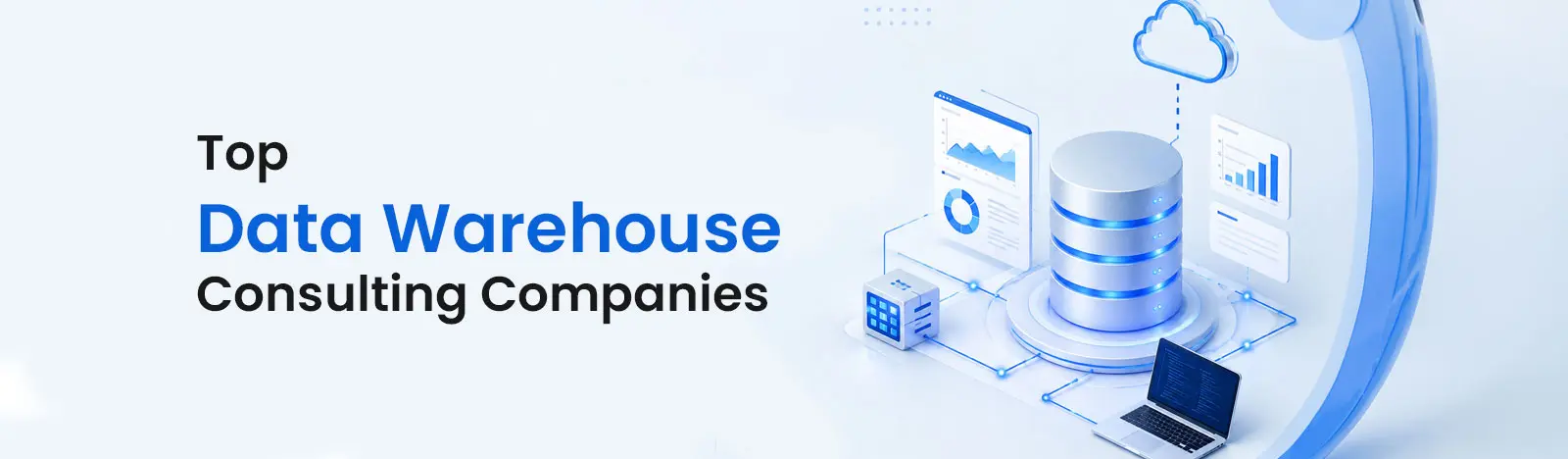
Most organizations don’t struggle to collect data anymore, they struggle to trust it. Sales numbers in one system disagree with finance numbers in another, marketing dashboards run on stale exports, and every new report starts with someone reconciling spreadsheets rather than analyzing results. A data warehouse is supposed to be the fix: one governed, structured layer that consolidates data from ERPs, CRMs, and operational systems into a single, query-ready source of truth.
Data warehouse consulting is expert guidance on planning, designing, building, migrating, and supporting the centralized system that stores structured, historical business data for reporting and analysis. It typically covers data modeling and schema design, ETL/ELT pipeline development, platform selection (Snowflake, Amazon Redshift, Google BigQuery, Microsoft Fabric/Azure Synapse, or Databricks), performance tuning, cloud migration from legacy on-premises warehouses, and governance controls like access management and lineage tracking.
| Criteria | What We Looked At |
| Data Warehousing Expertise | Depth in schema design, ETL/ELT development, warehouse architecture, and performance optimization. |
| Cloud & Platform Coverage | Documented, verifiable work on Snowflake, Amazon Redshift, Google BigQuery, Microsoft Fabric/Synapse, and Databricks. |
| AI & Analytics Readiness | Ability to prepare governed, well-modeled data that supports BI, advanced analytics, and downstream AI/ML use cases. |
| Industry Experience | Relevant delivery across manufacturing, healthcare, retail, financial services, logistics, and other enterprise sectors. |
| Delivery Model & Scalability | Track record on projects of comparable scope, plus ongoing support, managed services, and geographic reach. |
| Evidence & Market Presence | Official company documentation, case studies, verified reviews, and named technology partnerships. |
These are some of the Best Data Warehouse Consulting Companies in 2026 to consider.
As a data warehousing company, Beyond Key focuses on building and supporting solutions around each organization’s specific needs.: assessing the current data landscape, designing a platform-agnostic architecture, and then implementing and supporting the warehouse over time. The firm has been delivering data warehousing work since 2008, and it layers in data quality, cataloging, and governance so the finished warehouse is something teams can actually trust their reporting to.
What sets the engagement apart is flexibility on platform choice: Beyond Key supports both Databricks and Snowflake environments and pairs its data warehouse practice with Microsoft-centric strengths in Power BI, Azure, and the broader Power Platform, while still describing its recommendations as vendor-neutral rather than tied to a single stack.
Best for: Customized, full-lifecycle data warehouse builds.
Key capabilities: Data warehouse strategy and design, cloud-native and hybrid warehouse builds, ETL/ELT automation, Databricks and Snowflake support, data quality and governance, and Power BI-ready reporting layers.
When a data warehouse project is really one workstream inside a much larger digital transformation, program office, ERP overhaul, and multiple business units all in motion at once, Infosys’s scale and cloud partnerships start to matter more than boutique customization. The company has run large data warehouse and EDW modernization work for global enterprises, including migrating legacy warehouses to the cloud and building out big data warehousing on Hadoop-based architectures for high-volume reporting needs.
Best for: Enterprise-scale data warehouse modernization.
SoftServe’s data warehousing work sits inside a broader big data and analytics practice built on deep MPP (massively parallel processing) warehousing experience, and the firm has positioned itself specifically around migrating legacy data platforms to cloud-native warehouses such as Amazon Redshift and Snowflake rather than a simple lift-and-shift. As a Premier-tier AWS consulting partner alongside long-standing Google Cloud and Microsoft partnerships, SoftServe can span the full path from architecture advisory through large-scale migration execution.
Best for: Cloud-native data warehouse migration and modernization.
N-iX runs a dedicated data warehouse consulting practice covering the full span from strategy and architecture through cloud migration, modernization, and ongoing optimization, backed by a data team of more than 200 specialists and dozens of completed data warehouse and data lake projects. The firm holds official partnerships with AWS, Google Cloud, and Microsoft Azure, and has been recognized externally as a rising name in data engineering. Its FinOps-oriented approach to cost control is also a useful differentiator for enterprises trying to keep cloud spend predictable as the platform scales.
Best for: Multi-cloud data warehouse consulting with strong compliance posture.
ScienceSoft has been in data warehousing and business intelligence specifically since 2005, part of a broader data analytics practice dating back to 1989, and that tenure shows in how methodically the firm approaches a build: current-state assessment, architecture and platform selection, implementation, and ongoing optimization, backed by ISO 9001 and ISO 27001 certifications for quality and security. For organizations that don’t want to manage a warehouse in-house at all, ScienceSoft also offers a subscription-based data-warehouse-as-a-service option paired with managed analytics.
Best for: Long-tenured data warehousing and BI expertise across industries.
Reenbit is a smaller, more focused shop built specifically around the Microsoft data stack, with hands-on experience in Azure Synapse Analytics and Microsoft Fabric, the unified platform that now folds data warehousing, data engineering, and Power BI into a single environment. That focus makes Reenbit a natural fit for organizations that are already committed to Azure and want a partner who lives in that ecosystem rather than one juggling several cloud platforms at once. The firm emphasizes close, transparent client communication throughout a project and positions itself on responsiveness and delivery speed.
Best for: Microsoft Fabric and Azure-native data warehousing.
Cobit Solutions is a boutique consultancy built around the Microsoft ecosystem, Power BI, Azure Synapse, and Microsoft Fabric, with additional experience on Snowflake, Amazon Redshift, and Databricks for clients who need to work across platforms. Founded in 2018, the firm has delivered a large volume of BI and data warehouse projects across more than 20 industries, typically for companies with tens of millions to over a billion dollars in annual revenue. The firm also integrates data from common ERP systems, including Dynamics 365, Business Central, NetSuite, and Epicor, and CRM platforms like Salesforce and HubSpot.
Best for: Boutique, fast-turnaround warehouse builds for mid-market companies.
| Company | Best For | Key Strengths | Typical Fit |
| Beyond Key | Customized, full-lifecycle builds | Platform-agnostic architecture, Databricks/Snowflake, Power BI | Mid-market to enterprise wanting a tailored partner |
| Infosys | Enterprise-scale modernization | Global delivery, migration accelerators, multi-cloud | Multinational enterprises with complex programs |
| SoftServe | Cloud-native migration | Premier AWS/Google Cloud partner, MPP warehousing depth | Enterprises migrating legacy platforms to the cloud |
| N-iX | Multi-cloud consulting | 200+ data specialists, AWS/GCP/Azure partnerships, FinOps focus | Enterprises needing compliance and cost control |
| ScienceSoft | Long-tenured DWH & BI expertise | ISO-certified, 30+ industries, DWH-as-a-service option | Companies wanting proven, methodical delivery |
| Reenbit | Microsoft Fabric/Azure builds | Azure Synapse and Fabric specialization, close communication | Teams standardized on the Microsoft data stack |
| Cobit Solutions | Fast-turnaround mid-market builds | Rapid first results, ERP/CRM integration, Power BI focus | Mid-market companies consolidating systems |
Gartner-cited research reports that Governance and planning gaps can significantly increase the risk of migration delays. Organizations should treat database migrations as high-risk transformations, emphasizing phased assessments, quantified risk mitigation, and disciplined planning to improve migration outcomes.
Honestly, there’s no single number anyone can give you here, and you should be skeptical of anyone who quotes a price before understanding your setup. What you’ll actually pay comes down to a handful of things: how much data you’re moving, how messy your source systems are, which cloud platform you land on, how strict your compliance requirements are, and whether you’re working with an onshore team, an offshore team, or some mix of both.
That said, most engagements tend to fall into one of three buckets:
One thing worth saying plainly: don’t just chase the lowest bid. A warehouse that’s cheap to build but poorly modeled or governed almost always ends up costing more in the long run.
How much does data warehouse consulting cost in the USA in 2026?
US-based data warehouse consultants will typically charge between $100 and $220 per hour. A warehouse build or a mid-sized warehouse migration fixed fee project will usually be between $15,000 and $150,000 depending upon number of source systems, volume of data and governance requirements. For enterprise-scale programs spanning multiple business units and facing stringent compliance needs, it is often much more than that. Firms that blend onshore leadership with offshore delivery capacity can often bring total cost down without losing project oversight.
Can a data warehouse a consultant builds connect to the BI tools we already use?
Yes, a properly modeled warehouse should feed Power BI, Tableau, Looker, or any other reporting layer without requiring a rebuild, provided the underlying data model, security rules, and refresh cadence are designed with that endpoint in mind from the start. Access controls set at the warehouse layer typically carry through to the reporting layer automatically, so permissions don’t need to be recreated tool by tool. Planning for that handoff is exactly what a data warehouse consultant should account for from day one.
What’s the difference between a data warehouse, a data lake, and a Lakehouse?
A data warehouse stores structured, cleaned data organized specifically for fast, predictable reporting and business intelligence. A data lake stores raw data of any format, structured or not, and is often used as a staging area or for exploratory analytics and machine learning. A Lakehouse blends the two, combining the storage flexibility of a lake with warehouse-style structure and query performance. Many organizations end up running some combination of all three rather than picking just one.
How long does a typical data warehouse implementation take?
A focused project, such as building a single subject-area warehouse or migrating one legacy system to the cloud, usually takes 8 to 14 weeks. Enterprise-wide modernization involving multiple source systems, a phased cloud migration, and a governance framework commonly runs 4 to 9 months. Starting data quality, the number of downstream reports that depend on the warehouse, and how much historical data needs to migrate all affect the timeline.
Do I need a vendor-certified partner, or will any data warehouse firm do?
It’s not a strict requirement, but partner status with Snowflake, Databricks, or a Microsoft Solutions Partner designation for Data & AI means the firm has been through the platform’s technical vetting and keeps certified engineers on staff. It’s a faster filter than reading case studies one at a time, even though it’s not a guarantee of fit by itself. It’s worth asking specifically which platforms a firm is certified on, since general ‘cloud experience’ on a website doesn’t always mean current, verified partner status.
Beyond Key works across the full data warehouse lifecycle, starting with an assessment of the current environment, existing data sources, and target architecture, then moving into design and implementation of the warehouse on a platform-agnostic basis rather than pushing a single preferred vendor.
That build includes ETL/ELT pipeline automation, migration from legacy or on-premises systems, and integration from ERPs, CRMs, APIs, and flat files, with data quality checks, cataloging, and governance built in from the start so the finished warehouse is something teams can actually rely on for reporting.
Beyond Key also supports Databricks and Snowflake environments and connects the warehouse directly into Power BI and the broader Microsoft data stack, giving reporting teams a governed, well-modeled foundation without locking the organization into a single cloud vendor. A strong data warehouse supports better analytics and AI initiatives, though it doesn’t guarantee their success on its own.
A data warehouse has quietly become the layer that determines whether reporting, analytics, and AI initiatives can actually be trusted. No single provider is the right fit for every organization; the right choice depends on data maturity, existing technology stack, industry, and how much hands-on partnership a team wants. Technical depth matters, but so do governance, cost discipline, and who’s responsible for the platform after launch. If you’re planning a first-time build or a migration off a legacy system, Beyond Key’s data warehouse team can help assess where you stand and map a practical next step.