From Cloud to AI: Top 7 ERP Trends to Follow
ERP software is a strategic investment an organization can make. From driving business functions to streamlining administration, ERP software drives business success. Businesses across all industries are considering investing in cloud ERP. Benefits of cloud-based ERP include: better scalability, easy integration, improved ROI, less cost on infrastructure, and more.
There are many reasons why adopting ERP trends and shifting from legacy ERPs, such as Microsoft NAV software, to a cloud-first ERP, such as Dynamics 365, can benefit your business.
Legacy ERP, such as NAV software, can hinder business growth due to limited integration capabilities, outdated technology, slow performance, and high maintenance costs. On the other hand, modern ERP systems such as Dynamics 365 are cloud-based, eliminating redundant processes by enabling seamless integration across departments – finance, operations, customer management, and more.
In this blog, we will read about how upgrading your ERP software from a legacy approach to modern ERP trends can help businesses grow.
What is the Role of Embracing ERP Trends?
Businesses embracing ERP trends can leverage evolving technologies and transform their operations. Businesses can transform, automate, and optimize their operations with centralized data management. Modern ERP software that are backed by trending technology offer role-based dashboards and permission control. It boosts data security and ensures that you achieve long-term business goals.
7 ERP Trends to Follow
To survive the cutthroat competition, businesses must adapt to emerging technologies quickly. ERP solution is evolving into strategic engines to promote agility and ensure business resilience. Let us have a look at 7 ERP industry trends to follow:
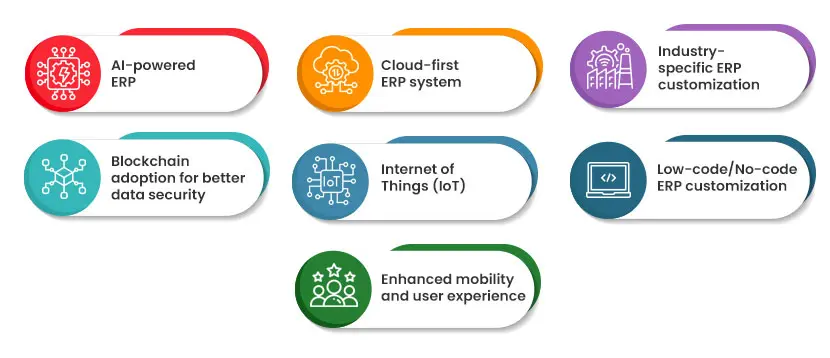 1. AI-powered ERP software
AI-powered ERP software delivers real-time insights into the organization. AI-ML capabilities allow businesses to leverage data analytics and automation tools to drive daily operations. It also focuses on forecasting marketing trends, sales, and enhancing business efficiency. Here is how AI is becoming one of the key ERP trends:
- Predictive analytics: ERP integrated with predictive analytics helps companies anticipate supply chain disruptions, financial forecasting, and more.
- Automation: Improves accuracy in data entry, warehouse automation, and monitors anomalies in real-time. AI promotes the management of operations without human intervention.
- Natural language processing: Makes user interaction accessible through voice interaction and language processing.
2. Cloud-first ERP System
Cloud ERP models have simpler deployment models. Cloud has completely revolutionized the way businesses work. From AI to ML and blockchain, and other technologies, these are operational because of cloud. Organizations are increasingly adopting cloud models to enhance performance. These are cost-efficient too.
- Hybrid cloud ERP: This approach combines public and private cloud environments while ensuring system agility and data security.
- Edge computing: ERP-as-a-Service: This model allows organizations to get access to robust ERP capabilities without investing much in the infrastructure.
3. Industry-specific ERP
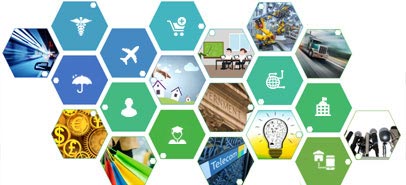
ERPs no longer fit in the way one-size-fits all approaches. Businesses expect to have tailor-made, purpose-built platforms that can be synced well with the regulations, unique compliance needs, and operations they work on in their industry.
Industry-specific ERP systems have customizable dashboards, conversational user interface, and tools to empower companies to excel without extensive technical expertise. For example, a discrete manufacturer will have different set of workflows than a process manufacturer and might need modules that vary for each industry. Secondly, if we talk about healthcare industry, ERPs are designed to manage the extensive patients’ records, comply with strict industry-standards, integrate with billing systems, and manage other administrative tasks with ease.
4. Blockchain adoption for better data security
As the concern of cyber threats and breaches increases, integration of ERP with blockchain has become a critical element. The benefits of ERP blockchain integration are:
- Automated and scheduled equipment maintenance
- Facilitated multi-party transactions
- Tracked compliance, and
- Minimized paperwork.
Elements of blockchain technology include:
- Smart records: Automates agreements and ensures contract terms across all levels in the organization, to reduce errors and disputes.
- Decentralized security framework: Blockchain technology ensures the protection of data from unauthorized access and attacks such as ransomware.
- Immutable transactions records: Your data across all departments, from sales, finance, procurement to supply chain remains tamper-proof.
5. Internet of Things
Internet of Things in ERP enables real-time data collection while integration devices and sensors with business management software. The purpose of this integration is to automate operations, enhance visibility into tasks, and ensure smarter decisions across all business departments.
IoT connects the physical world of industry with the digital world and enables faster decision-making by providing real-time insights from machines and software.
6. Low-code/no-code ERP
Low-code/no-code ERP systems allow users to design, personalize and manage software using simpler, drag and drop interfaces instead of complex coding and programming knowledge. Even non-tech users can manage and tailor ERP workflows.
- Businesses can roll out updates quickly
- Companies can adapt to changing business needs without taking much time
- Users can modify dashboards and reports with drag-and-drop visual interface
7. Enhanced mobility and user experience
Modern ERP systems are designed to provide real-time access to business data and conduct back-end and front-end tasks on-the-go. Whether it is about monitoring checkout terminals at the airport or warehouse floor checks, modern ERP encourages collaboration across workforces from different time zones.
With a user-friendly, mobile-based ERP, users can work from anywhere and complete tasks, manage approvals, track time, call logs, and view the status of workflows on the go. This leads to improved productivity and agility.
When we talk about user experience and mobility, data analytics also play a great role in boosting profitability. Data analytics tools for descriptive, diagnostic, prescriptive, and predictive analysis ensure that the supply chain is streamlined and promotes financial forecasting. Modern ERP helps businesses predict demand using Power BI tools, use historic data to evaluate supplier performance, analyze customer behavior, and reduce manual work.
What are the ERP Predictions for the Future?
As the ERP market in the cloud continues to grow, let us look at a few predictions about how ERP might look in the future:
1. Autonomous solutions: AL and ML technologies will ensure that companies can proactively manage business operations without much human intervention
2. Blockchain integration: We have already spoken about it in this blog. Prediction is that organizations can use blockchain technology to create green ledgers to track environmental data. This can help financial teams with actual reports about environmental data.
3. Conversational AI: ERP system dashboards will be embedded with conversational AI and voice interfaces to help users perform operations by using natural language commands instead of mouse clicks.
Are you Ready for Change?
If you want to stay ahead of the competition and utilize the capacity of ERP systems to the fullest, it is important to adopt an ERP approach that enables:
- automated business strategy
- forward-looking architecture that balances AI-based features
- business process orchestration with vendors
From manufacturing to finance, education to healthcare, ERP system will look for ways to utilize the power of budding technologies. Whether it is cloud computing, blockchain or IoT, ERP systems can integrate with all technologies to support workflow automation for enhanced efficiency. By following modern ERP industry trends, businesses can take a leap forward and dive into modern world.
Organizations that leverage these technologies will take the leap and stay ahead of the competition. Whether you are on the journey of selecting a new ERP or optimizing your current one, or whether you are looking to replace your legacy ERP with a cloud-based solution, we are here to help. Our ERP consultants provide strategic counselling and guidance to help you support with your business investment.
Frequently Asked Questions:
1. What are the ERP trends for 2026?
- AI-driven automation
- Cloud adoption
- Mobile accessibility
- Industry-specific solutions
- Low-code/no-code ERP
- Internet of Things integration
- Data analytics and predictive planning
Modern ERPs will support ecosystem integration and interoperability. It will allow businesses to manage and edit complex data and business workflows in multiple platforms.
2. What are the top 5 ERP systems?
The top five ERP systems with a global clientele, including Fortune 500 companies, are: SAP S/4 HANA, Microsoft Dynamics 365, Odoo, Oracle ERP Cloud, and NetSuite ERP.
3. Why is AI-powered ERP becoming essential for modern enterprises?
Artificial Intelligence has become a critical element for modern ERPs. AI-powered ERP system can help companies predict demand fluctuations, forecast customer behavior, identify risk and issues. Artificial Intelligence promotes automation of tasks, enables smarter supply chains, and accelerates finance operations through ERP systems.
4. How does a cloud-first ERP system improve scalability and performance?
Cloud ERP allows businesses to scale up and down based on demand. It makes scaling hassle-free and ensures that resources are allocated efficiently while reducing costs.
Data is centralized in the cloud, which allows users to co-author documents, add, edit, and manage data across all departments on the go. When tasks are streamlined and data is available in real-time, it boosts employee productivity and reduces errors. This ultimately enhances business performance.
5. What is industry-specific ERP, and why is it better than generic ERP solutions?
Industry-specific ERP offers functionality designed to meet specific business needs and functional requirements for a particular sector. Industry-specific ERP software is tailored to the needs of sectors such as manufacturing, healthcare, education, logistics, construction, and more.
Generic ERP systems are good for those industries with less complicated structure and workflows. It helps when you have a strong IT support in-house for added customization (for the time you want to tailor your ERP functionality)



 Non Profit